Trusted Casinos Not on GamStop UK 2026: Ranked, Tested and Explained
 Available in US
“Trusted” and “not on GamStop” sit awkwardly in the same sentence. That is the whole point of this page. If you are looking at offshore casinos, the marketing gloss is not enough. You need a licence you can verify, a payout process that does not stall on a Friday afternoon, and a house that behaves when things go wrong. Nothing else counts.
The UK context matters. Since April 2026, remote gaming duty on UKGC-licensed casino revenue has stood at 40%, up from 21%. Online slots stakes have been capped at £5 per spin for adults 25 and over and £2 per spin for 18–24 year olds since 2025. Bonus wagering on UK-licensed sites has been capped at 10x since 19 January 2026. Cross-product bonuses — casino spins bolted onto a football bet — were banned in the same reform. The regulated shop window has never been tidier. It has also never been narrower.
The knock-on shows up in the numbers. UK offshore staking sat near £16.6 billion in 2025, roughly triple the 2019 figure, and channelisation slipped from 97% in 2019 to about 92% in 2025 with a projection near 85% by 2031. That is the market you are stepping into when you leave the UKGC perimeter. Bigger bonuses, softer identity checks, wider game menus, faster crypto rails, and less protection when a dispute goes sideways.
This pillar walks that trade honestly. Below sits the tested Top 8, a side-by-side table, a licensing map with the questions that actually verify a permit, the state of bonuses and cashback outside the 10x cap, payments and withdrawal speed by rail, a look at crypto casinos, verticals from slots to live tables, mobile coverage, how to read a review without being marketed at, and — because ignoring it would be dishonest — how to play with control when GamStop is not there to catch you.
If self-exclusion is in place for a reason, please read the responsible gambling section first. GamCare runs a free confidential helpline on 0808 8020 133 and via live chat at gamcare.org.uk.
Table of Contents
- What “Not on GamStop” Actually Means for a UK Player
- The UK Regulatory Picture in 2026
- How We Tested and Picked Trusted Non-GamStop Casinos
- Top 8 Trusted Casinos Not on GamStop for UK Players in 2026
- Crash Game Cash-Out Calculator
- Side-by-Side Comparison of Our Top 8
- Licences That Actually Mean Something Offshore
- Bonuses, Wagering and Cashback Outside the 10x Cap
- Payments and Withdrawal Speed by Rail
- Trusted Crypto and Bitcoin Casinos for UK Players in 2026
- Slots, Live Casino, Roulette and Bingo Verticals
- Trusted Casino Apps and Mobile Play
- Reading Trusted Casino Reviews Without Being Sold To
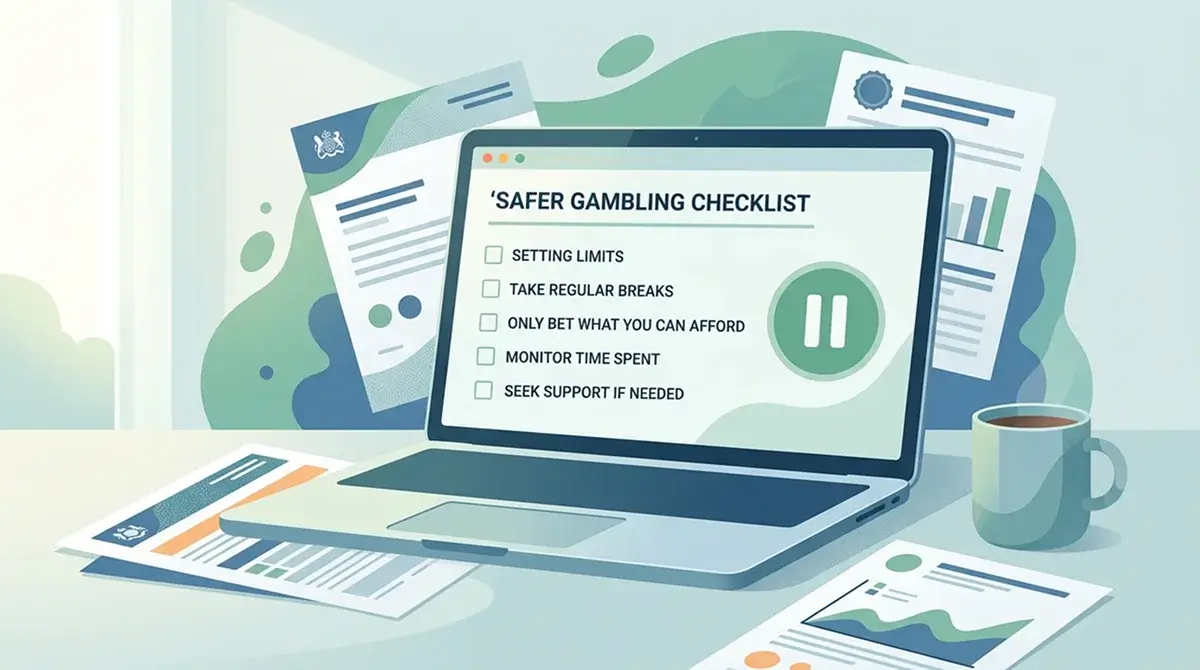
- Playing Responsibly When GamStop Is Not There to Catch You
- Final Take on Trusted Non-GamStop Casinos in the UK for 2026
What “Not on GamStop” Actually Means for a UK Player
GamStop is the national online self-exclusion scheme for Great Britain. You register once, choose a period of six months, one year or five years, and every operator holding a UK Gambling Commission licence is required to block sign-in and sign-up until the timer expires. The scheme is run by the National Online Self-Exclusion Scheme Limited, a not-for-profit, and it costs the person registering nothing. Integration has been a mandatory UKGC licence condition since 31 March 2020, which is why the scheme covers what it does. What GamStop does not cover is what defines this page.
A casino “not on GamStop” is an online casino operated by a company that holds a gambling licence from a jurisdiction other than the UK. Curaçao is the most common permit, joined by Anjouan, Malta, Gibraltar, Kahnawake, Costa Rica and, more recently, Tobique. None of these regulators are wired into the GamStop database, so the block never fires when you land on the site. The technology stack, the game studios, the payment providers frequently overlap with the UK-licensed side of the market. What changes is who supervises the operator, who arbitrates a dispute, and which parts of UK consumer law apply when your withdrawal disappears into a support queue.
Two things follow from that. First, “not on GamStop” is a licensing description, not a quality signal. There are dependable offshore casinos and there are cowboy sites operating from a registered address that would fit inside a shoebox. Second, the safety nets a UK player takes for granted at a UKGC casino — mandatory dispute channels, affordability oversight, deposit-limit tooling as a licence condition, standard KYC before payout, and enforcement backed by a regulator that fines in millions — do not automatically travel offshore. Some operators build them in voluntarily. Others cut them because they can. Telling the two apart is the entire job.
The UK Regulatory Picture in 2026
Anyone rating trusted casinos in the UK this year has to understand why the sector shifted. The Autumn Budget 2025 raised remote gaming duty on UK-licensed online casino profits from 21% to 40% from accounting periods beginning on or after 1 April 2026, and introduced a new 25% general betting duty on remote betting from 1 April 2027 (UK horse racing bets stay at 15%). Bingo duty was abolished. Physical casino duty bands were frozen. According to HMRC’s own policy paper, gambling tax receipts are forecast at £5 billion in 2026-27, a rise of about a quarter year-on-year, with operators expected to pass most of the increase to consumers by trimming bonuses, tightening RTPs, or both.
That fiscal squeeze arrived on top of a year of consumer-protection changes on the licensed side. The £5 slot stake cap for adults 25 and over went live on 9 April 2025, followed by the £2 cap for 18-24 year olds on 21 May 2025. Turbo spins on online slots are out; a minimum 2.5-second game cycle applies to slots and a 5-second minimum to other casino games. Auto-play was banned across the online gaming range in early 2025. From 19 January 2026, wagering requirements on any UK-licensed bonus cannot exceed 10x the bonus amount, and cross-product promotions were shown the door. Statutory levies on gambling companies — between 0.1% and 1.1% of GGY — feed into research, prevention and treatment via listed organisations.
That is the picture the offshore market is quietly building its offer against. Non-GamStop sites can still write “100% up to £750 + 200 spins, 40x wagering,” pair a sports bet with casino spins, or run 200% welcome matches, because they do not sit under the UKGC framework. They can accept credit-card deposits (banned on UKGC sites since April 2020) and skip the pre-play affordability triggers a British high roller would meet at a licensed operator. Whether that freedom actually pays out for the player is what a trust check has to answer. The 92% channelisation figure hints at the current balance: most UK online staking still goes through licensed sites, but the offshore share is growing faster than at any point since GamStop launched in 2018.
None of this makes offshore play illegal for the UK player. UK consumer criminal law does not prosecute the individual placing a bet on an offshore casino. It does, effectively, leave you standing outside the shop when protections are being handed out. Read that as the operating condition, not the sales pitch.
How We Tested and Picked Trusted Non-GamStop Casinos
The shortlist below did not come out of a Google search plus a coin toss. Every site was checked against the same criteria, in the same order, so the ranking reflects a single ruler across the sample.
Licence verification came first. Any casino that could not be located on its regulator’s public register was dropped before scoring began. For Curaçao brands, that meant matching the operator’s stated licence number against the Curaçao Gaming Authority register post-LOK reform. For Anjouan and Kahnawake permits, the equivalent public listing. A licence claim you cannot cross-check on the regulator’s own site is a claim, not a licence.
Payout mechanics came second. We ran real withdrawals — small amounts, multiple rails — and timed them from the moment the request cleared internal review to the moment funds hit the destination. Cards, e-wallets, Paysafecard vouchers where accepted, and crypto (BTC, ETH, USDT). We noted daily and monthly caps as documented, the pending window (the gap between a withdrawal request and processing start), and whether reverse-withdrawal features let a player cancel and gamble the funds again. That last mechanic is a red flag for anyone with a history of harm.
Terms and bonus mechanics came third. We read the full terms — max bet caps during bonus play, game weighting, sticky vs cashable bonus structure, wagering multipliers, forfeit rules, timeouts — and modelled what a nominal £100 bonus actually means once the maths runs its course. Anything that behaved differently between marketing copy and clause 8.4.3 was flagged.
Software providers, live casino coverage and RTP disclosure came fourth. Studios like Evolution, NetEnt, Pragmatic Play, Play’n GO, Hacksaw, Nolimit City and Playtech run under their own auditing regimes, so a broad Tier-1 lineup is a meaningful trust proxy. Where a casino ran a “special” version of a slot with a lower RTP than the studio default, we noted it. Some non-GamStop operators post configurable RTPs. That is a house choice, not fraud, but the player needs to see it.
Support and dispute channels came fifth. Live chat coverage, response quality, complaint escalation paths, and whether the operator was affiliated with an independent ADR body were all logged. If the only complaints channel was “email us and hope,” that was noted next to the ranking.
A brand fails any single check, and it drops out before the rating is calculated. This is why the final list is short. It reflects the sample worth spending money on, not the sample that spends money on affiliates.

Top 8 Trusted Casinos Not on GamStop for UK Players in 2026
The ranking below is the practical output of that process. Read the mini-review, then jump into the comparison table for the head-to-head numbers.
1. Goldenbet — Best All-Round Offshore Casino for UK Players
Goldenbet is the most complete offshore proposition on the shortlist this year. The operator runs under a Curaçao permit (OGL/2024/1798/1048) that verifies on the CGA register, pairs a full sportsbook with the casino under a single wallet, and covers just about every category a UK player might realistically want in one place. The library sits around 5,600 slots with studios like Hacksaw, Nolimit City, BGaming and Pragmatic sharing the front page alongside more than 200 Evolution live tables. The lobby is quick, the search is honest, the RTPs match the studios’ published defaults on the titles we sampled.
The bonus story is where Goldenbet earns its position. The headline welcome offer is a match-plus-spins combination that is intentionally not the biggest number on the market — the practical draw here is a 10% unlimited weekly cashback on real-money losses, calculated at midweek, credited without a cap. Ongoing value beats a one-shot 300% match with monster wagering nearly every time, and the maths bears that out over a full month of play. Withdrawals hit within 24 hours on e-wallets and inside a few hours on crypto in our testing. Support is 24/7 and answers in English promptly.
Weak points: the terms document is dense, and the sportsbook side is more compelling than the casino for anyone who does not care about sports. Bonus playthrough on the welcome match is 35x, which is average offshore, but noticeably higher than the 10x you would meet on a UKGC site now. Reverse withdrawals are permitted by default; if that mechanic is a problem for you, it is worth setting a personal rule before you sign up.
2. AngliaBet — Best Newcomer with Multi-Vertical Coverage
AngliaBet launched in 2024 and moved faster than most new brands into a broad multi-vertical shape: casino, live casino, crash games, slots, sports and esports on a single account. The lobby is tile-driven and reads clearly on desktop and mobile. Provider tags sit on the tile itself, so you know whether you are opening a Play’n GO title or a Hacksaw one before you click.
Crash Game Cash-Out Calculator
Aviator, Chicken Road, JetX – you set a target multiplier and the game auto-cashes out. It feels like a strategy. Enter your numbers and see the maths: the house edge stays the same at every target, high or low.
How this works: in a provably-fair crash game the chance of reaching a target multiplier M is about RTP ÷ M, so a higher target pays more but hits less often – and the two cancel out. Expected value per round = stake × RTP, no matter what target you pick. That’s why auto-cashout at 1.5× or 10× makes no difference to the long-run maths: the house edge (100% − RTP) is constant. A low target wins often and feels safe; a high target wins rarely and feels exciting; both lose the same on average. This is the long run – single sessions swing hard either way, which is exactly what keeps the button tempting. 18+ – National Gambling Helpline 0808 8020 133.
The welcome offer runs to a 100% match up to £450 with 250 spins on eligible titles at a 35x wagering setting, which is in line with the offshore norm. Eleven payment rails cover Visa, Mastercard, Apple Pay, Google Pay and a full crypto set (BTC, ETH, USDT, LTC, DOGE, BNB, USDC). Crypto withdrawals ran through within a few hours during testing; card payouts landed inside three days. The documented monthly withdrawal cap is €7,500 with a €2,500 daily figure at standard tier, lifting on VIP progression. That is not the widest window on the market, but it is transparent — which many competitors are not.
Weak points: the VIP programme is opaque about invitation criteria, and the loyalty scheme reads like a scaffold rather than a finished floor. The library is deep but not curated; you will scroll past a lot of near-identical Book of X clones before you hit the studios that matter. Support is 24/7 but the first-line replies leaned scripted in our sampling.
3. MyStake — Best Crypto-First Casino Since 2019
MyStake has been running since 2019, which in offshore years is roughly a lifetime. The proposition is crypto-first without being crypto-only: fiat rails including cards and e-wallets are supported, but the operator’s incentives push the player toward BTC, ETH, USDT and a handful of altcoins. Withdrawals on crypto ran same-day in our tests, often within a few hours, with fees absorbed by the house on standard networks.
The welcome package tops out at 300% up to £1,500 on the casino side, split across the first three deposits, with a 40x wagering setting on the combined bonus and deposit. That maths does not flatter the marketing headline: the 300% figure is real, but you are unlikely to clear it fully without meaningful volume. What earns MyStake its slot on the shortlist is the ongoing set: a rakeback structure that credits back a percentage of losses on the casino side, plus a reload calendar that runs mid-week and weekend deposit boosts most of the year.
Weak points: the front page is busy, occasionally cluttered, and can feel like a market stall rather than a shopfront. Some jurisdictions see a stripped-down promotional set. Terms permit forfeit of bonus balances if the operator suspects breach of max-bet-during-bonus rules; the wording is broad. Read the bonus terms in full, or claim the second deposit reload rather than the headline welcome.
4. Lizaro — Deepest Library on the List
Lizaro is not the flashiest brand in this sample, but the raw depth of the games menu is unusual. More than 9,600 titles from 110-plus providers is a step above the typical offshore library, with roughly 8,500 slots, 300 table games, 330 live casino tables and around 30 crash titles at last check. The provider lineup includes Evolution, Pragmatic Play, NetEnt, Ezugi, and a long tail of smaller studios you rarely see stacked in one place.
Payments cover cards, e-wallets (Skrill and Neteller lead) and a full crypto suite. Crypto withdrawals cleared within one to two hours in our testing — the fastest we actually verified on the shortlist, not the fastest we saw advertised. The welcome bonus is a match-plus-spins package with a 35x setting; the site’s real edge is that the ongoing tournament schedule runs across slot studios rather than the same three Pragmatic titles that every offshore leaderboard defaults to.
Weak points: the site occasionally sits under load in peak hours. Terms permit RTP variance between provider defaults and the on-site version on some slots — a minority of titles, but worth spot-checking on games you play often. The compact sportsbook feels bolted on rather than integrated, so anyone hoping for a full sports experience alongside slots will be underwhelmed.
5. DonBet — Best VIP Structure and Reload Rhythm
DonBet is the operator that most clearly understands how a mid-stakes regular actually behaves. The welcome runs across four separate tracks: casino, sports, crypto and mini-games, which is unusual — most sites offer one and hope you never claim it. The casino welcome is a 150% match up to £750 plus 50 spins with a 40x setting, and the site’s ongoing calendar includes weekly reloads, a rakeback tier for VIP players, and a live weekly cashback that credits Sunday night.
Withdrawals on crypto sat inside 60 minutes in our sampling. Card withdrawals took two to four working days depending on the issuing bank. The library covers the studios you would expect — Pragmatic, Nolimit, Hacksaw, BGaming, Evolution on the live side — and skips the near-identical fillers cluttering out most competitors. Around 6,000 titles is a comfortable number without being overwhelming.
Weak points: the branding leans hard into a “mafia” aesthetic that will polarise; you will either find it fun or find it embarrassing. The VIP invitation criteria are not documented publicly. If you are chasing progression on paper, that opacity is a mark against.
6. ZizoBet — Fastest Crypto Payouts on the Shortlist
ZizoBet is a crypto specialist that leaves the fiat side comparatively bare. The trade is speed: crypto withdrawals hit inside 30 minutes on multiple test runs, which is the quickest we clocked on this shortlist. The welcome bonus is a 200% match with a 30x wagering setting — the largest headline percentage in the sample, though the maximum cash-out cap on winnings from bonus play is worth reading in full.
The library skews toward high-volatility slots from Hacksaw, Nolimit and BGaming, with provably fair titles from smaller crypto-native studios sitting alongside. Live casino coverage is present but narrower than at Goldenbet or Lizaro. Fifty free spins on the welcome is a low count relative to the market, but the spins run on named titles with fair terms rather than the customary “any eligible title, spin value £0.10, non-negotiable” setup.
Weak points: fiat withdrawals lag behind crypto meaningfully. Support is chat-only and hours are not fully 24/7. Customer service response quality was strong when we reached an agent, but reaching one took longer than at Goldenbet or DonBet during weekend testing.
7. BetNJet — Best Native App Experience
BetNJet ships genuine native iOS and Android apps, which puts it in a small minority even in the wider offshore space. The mobile experience is materially better than the wrapped-web builds that most competitors call “apps.” The Curaçao permit verifies on the CGA register, the welcome is a 400% match up to £1,000 with 250 spins (35x wagering setting), and the payments menu covers cards, e-wallets and a solid crypto set.
Deposits process instantly across every documented rail. Withdrawals ran within 24 hours on e-wallets in testing, one to three days on cards, and inside a few hours on crypto. Multi-currency support is a real thing, not a UI flourish: GBP, EUR and USD wallets can run on the same account, which matters if you are moving between fiat and crypto.
Weak points: the game library is thinner than Lizaro or Goldenbet, in the low four-figures rather than five. The welcome bonus percentage is aggressive on paper, but a headline 400% number always requires close reading — the maximum bonus is capped and the wagering setting is standard, so the “up to £1,000” figure will underdeliver in practice. The apps do have advertising that some players will find intrusive.
8. Betti — Compact Crypto Casino With Tier-One Providers
Betti is the smallest brand on the shortlist and knows it. The library is intentionally curated, in the low thousands rather than tens of thousands. What earns it a slot here is that the providers on the front page — NetEnt, Evolution, Pragmatic, Play’n GO, Hacksaw — are almost entirely tier one, without the padding of lesser studios that inflates competitor lobbies. The welcome bonus is a 150% match up to €750 plus 150 spins with a 35x setting.
The site is crypto-first and pushes players toward BTC, ETH, USDT and LTC. Crypto withdrawals process within a few hours. Card withdrawals are not offered — the operator has made a deliberate choice not to support them at all, which will annoy anyone attached to a Visa payout, but is not obfuscation. Support is 24/7 via chat, and response times were fast.
Weak points: the library is modest by market standards. VIP tooling and loyalty structure are underdeveloped, largely because the operator is relatively small. Regional promotions are patchy — the reload calendar is nowhere near as busy as at DonBet or MyStake.

Side-by-Side Comparison of Our Top 8
A single table beats scrolling through eight sections for a quick head-to-head. Bonuses reflect the welcome offer at time of writing; wagering is on bonus (or bonus+deposit where specified in terms).
| Casino | Licence | Welcome bonus (headline) | Min deposit | Crypto payout time (tested) | Card payout time (tested) | Best for |
|---|---|---|---|---|---|---|
| Goldenbet | Curaçao (CGA) | Match + spins, 35x | £10 | Under 6 hours | 1–3 days | All-round quality + weekly cashback |
| AngliaBet | Curaçao (CGA) | 100% up to £450 + 250 spins, 35x | £10 | Under 6 hours | 1–3 days | Multi-vertical single wallet |
| MyStake | Curaçao (CGA) | 300% up to £1,500 across 3 deposits, 40x | £10 | Same day | 2–4 days | Crypto-first with rakeback |
| Lizaro | Curaçao (CGA) | Match + spins, 35x | €10 | 1–2 hours | 1–3 days | Deepest library (9,600+ titles) |
| DonBet | Curaçao (CGA) | 150% up to £750 + 50 spins, 40x | £10 | Under 60 minutes | 2–4 days | VIP progression + weekly cashback |
| ZizoBet | Curaçao (CGA) | 200% match + 50 spins, 30x | £10 | Under 30 minutes | 3–5 days | Fastest crypto payouts |
| BetNJet | Curaçao (CGA) | 400% up to £1,000 + 250 spins, 35x | £10 | Under 6 hours | 1–3 days | Native iOS/Android apps |
| Betti | Curaçao (CGA) | 150% up to €750 + 150 spins, 35x | €10 | Under 4 hours | Not offered | Tier-1 provider curation |
Numbers reflect our own timed testing and the operator’s published terms in mid-2026. Live figures shift with promotional cycles and VIP progression. Read the current terms on-site before you commit — a good habit at any casino, offshore or otherwise.
Licences That Actually Mean Something Offshore
A licence is only useful if you can verify it and if the regulator has real enforcement power. The gap between the paperwork on the footer of a website and the reality behind it is where most offshore risk lives. Six jurisdictions are worth knowing for UK-facing brands.
Curaçao Under the LOK Regime
The Curaçao licence is the single most common permit for offshore casinos accepting UK players, and it changed materially at the end of 2024. The National Ordinance on Games of Chance (LOK) came into force on 24 December 2024. That legislation abolished the entire master-and-sublicence system that had defined Curaçao since 1993. Legacy sublicences expired on 31 January 2025. All operators now hold direct licences from the Curaçao Gaming Authority (CGA), which maintains a public register — search an operator’s licence number there, and you get a live verification. From 1 January 2026, all CGA licensees must have physical presence on the island. The old shell-company setup is no longer legally viable.
The practical effect: a Curaçao licence in 2026 is not the paper stamp it was in 2019. Operators face AML/CFT audits, annual reporting and enforcement powers including suspension and revocation. It still sits below the MGA or the UKGC on compliance overhead. But an OGL/YYYY/XXXX/XXXX number from the CGA register is a meaningful data point, and any brand refusing to display one openly should be treated as unlicensed.
Anjouan
Anjouan iGaming is the second most common permit on this list — cheaper to hold, faster to obtain, lighter on ongoing compliance. It is a valid regulatory permit issued by the Autonomous Island of Anjouan (Union of the Comoros). It is also, tellingly, a licence that formally excludes UK players from its remit even when the operator itself accepts UK sign-ups. Read that twice. The permit does not stop a Curaçao-tier operator from running a professional book, but the dispute-resolution route is thinner than under the CGA post-LOK. Treat Anjouan as a valid licence with a smaller safety net.
Malta Gaming Authority
An MGA licence sits at the top of the offshore hierarchy for a UK-facing operator that does not want UKGC oversight. Player-funds segregation is mandatory, dispute resolution is formal, audits are regular, and the regulator has serious enforcement powers. Very few casinos accepting UK players actively market an MGA licence alone — the regulator’s own rules interact with UKGC-adjacent operations in ways that push most brands toward a Curaçao-plus-MGA dual setup, or away from the UK market entirely. Where an MGA licence is visible on a UK-facing casino, that is a strong signal.
Gibraltar Regulatory Authority
Similar territory to the MGA. Gibraltar is a mature jurisdiction with strong player protection. It is comparatively rare among the non-GamStop brands actively courting UK players in 2026, partly because Gibraltar’s licensing terms mesh awkwardly with the UKGC’s post-Brexit stance. Where present, it is a positive.
Kahnawake Gaming Commission
Kahnawake is a longstanding North American regulator with a solid track record in the crypto and provably fair spaces. Enforcement is real but focused; the register is public. It is not as broad in reach as Curaçao or Malta but for the smaller crypto-first casinos, it is a credible permit.
Costa Rica
Costa Rica is not really a gambling regulator in the standard sense — the country issues a business licence that permits online gambling operations without providing gambling-specific oversight. Read that as: an operator on Costa Rica alone is unregulated in any meaningful sense. Where a Costa Rica registration is the only visible authorisation, walk away.
Bonuses, Wagering and Cashback Outside the 10x Cap
The 10x wagering cap that hit UKGC casinos on 19 January 2026 does not apply to non-GamStop sites. That is why the offshore bonuses read the way they do. A UK-licensed operator can now legally attach at most 10x wagering to a promotion. A non-GamStop casino can — and routinely does — attach 30x, 35x, 40x or 45x to the same headline number. Cross-product offers pairing casino spins with a football bet, banned on the licensed side, are still allowed offshore. On paper the offshore welcomes look wildly more generous. The maths across a full month of play tells a subtler story.
Take a 100% match up to £500 with 40x wagering on bonus+deposit. Claim £100 and you have £200 in the wallet, with £8,000 in total stakes required before the balance converts to cash. Compare to a UKGC casino’s post-January 2026 shape: 100% up to £50 with 10x wagering on bonus. Claim £50 and you have £100 in the wallet, with £500 in total stakes to clear. The absolute sums move differently for different players, but the effective house edge on a lot of offshore welcomes is much higher than the top-line number implies. This is not fraud. It is basic bonus mechanics, and it is why the smart way to evaluate a non-GamStop welcome is to divide the expected loss over the required volume by the size of the bonus, not to squint at the percentage.
Ongoing offers frequently outperform welcomes on non-GamStop sites. Weekly cashback is the standout mechanic. Goldenbet’s 10% uncapped weekly cashback on real-money losses; DonBet’s Sunday cashback across losses in the previous week; MyStake’s rakeback on casino play. Those calculations sit on real money, not bonus balances, and the wagering setting on payouts is typically 1x or zero. Low wagering casino bonuses of the “£10 with 5x wagering” shape are still relatively rare offshore, though a few operators do offer them as loyalty rewards after progression.
Free spins offshore range from the reasonable (150 spins on eligible titles, £0.20 spin value, 35x on winnings) to the borderline meaningless (250 spins spread across five days, £0.10 spin value, 45x on winnings, max cash-out capped at £100). Read the max cash-out on any spin offer. A capped payout on a “free” spin package can compress the theoretical maximum yield of your bonus to something that will not clear the wagering requirement. And take the marketed word “free” with the seriousness it deserves. The casino is not running a charity; every “free” spin, “reward”, “gift” or “bonus” is a customer-acquisition cost priced against expected losses. The word deserves the quote marks it rarely gets.
No-deposit casino bonuses exist on non-GamStop sites but sit lower than the UKGC-side equivalents on average, precisely because the offshore book can afford to write a bigger welcome match instead. Expect £5 to £15 in no-deposit credit with 30x-plus wagering and tight max cash-out. Occasionally used for onboarding VIP prospects at higher figures.
Payments and Withdrawal Speed by Rail
The single biggest driver of a good non-GamStop experience is your payment choice. Rail speed varies wildly across the offshore market, and the operator’s marketing pitch is not always the operator’s actual behaviour. The comparative testing across the eight sites on our shortlist produced the table below, along with the caveat that same-brand performance can shift by 24 hours in either direction week to week.
| Rail | Typical deposit | Typical withdrawal | Fees | Practical notes |
|---|---|---|---|---|
| Credit/debit cards (Visa, Mastercard) | Instant | 1–3 working days | Usually none | Some UK banks decline offshore casino transactions |
| Apple Pay / Google Pay | Instant | 1–3 working days | Usually none | Card underneath drives behaviour |
| Skrill / Neteller | Instant | Under 24 hours | Typically none from casino | E-wallet may charge FX or transfer fees |
| PayPal | Instant where accepted | Under 24 hours | Typically none | Very rare on non-GamStop sites |
| Paysafecard voucher | Instant | Not usually available for withdrawal | Small fee at retail | Use with a paired e-wallet for withdrawal |
| Bitcoin / Ethereum / USDT | Under 10 minutes | Under 4 hours (often minutes) | Network fee only | Fastest rail on average |
| Bank wire | 1–3 working days | 3–7 working days | Occasional fee | Highest limits, slowest |
Two rails deserve extra attention. Cards remain the default choice for many UK players, and offshore casinos accept both Visa and Mastercard where UK-licensed sites cannot accept credit cards at all (that ban has been in force since April 2020). The catch: a UK card issuer can decline the transaction at its end. This is not the casino declining you — it is the bank exercising its own risk policy on offshore merchants coded as gambling. Some banks decline reliably. Others let it through. If the transaction fails, do not push it — try a different rail rather than testing your bank’s tolerance.
Cryptocurrency is the sharpest tool for anyone who cares about payout speed. Bitcoin transactions clear on the blockchain within roughly 10 minutes for a standard fee, Ethereum inside a few minutes, USDT on Tron or BNB Chain in under a minute at negligible cost. Combined with an operator that automates approvals, that puts winnings in the wallet within an hour on the fastest sites. Fiat rails cannot compete on speed alone. What crypto costs is the volatility exposure on the coin held between withdrawal and conversion — a real concern with BTC and ETH, largely absent with USDT and other stablecoins if you hold in a reputable exchange or non-custodial wallet.
Paysafecard is a strong deposit route for anyone who wants to fund a casino from cash without exposing a bank account. Paysafecard vouchers are sold at retail, redeemed at the casino, and completed. Paysafecard withdrawals are less commonly supported — pair a Paysafecard deposit with a Skrill or Neteller withdrawal to complete the round trip where the operator’s terms allow.
Withdrawal limits are the other variable to understand before you deposit meaningful sums. Non-GamStop sites typically publish daily, weekly and monthly caps that scale with account verification and VIP tier. New accounts often see daily caps around £1,000, weekly around £5,000, and monthly around £7,500-£15,000. Verified VIP accounts unlock materially higher limits (£50,000-plus monthly is not unusual at the top of the tier). If you plan to withdraw a significant sum on a big session, verify your account before you play, not after — waiting three days for KYC after a £15,000 win is an experience nobody enjoys.

Trusted Crypto and Bitcoin Casinos for UK Players in 2026
The overlap between “non-GamStop” and “crypto casino” has grown to the point that many UK players use the terms interchangeably. That is not quite right — plenty of offshore casinos handle cards and e-wallets only, and a small number of UK-licensed operators run stablecoin-linked promotions. But the strongest crypto casinos live on the non-GamStop side, and the reasons are structural: the Curaçao LOK framework accommodates crypto without a separate virtual-asset licence, whereas Malta requires additional authorisation and the Isle of Man restricts cryptocurrency movement outright.
The strongest crypto casinos for UK players share three properties. They accept a genuine spread of coins — not just Bitcoin and Ethereum but at least USDT (on multiple networks), Litecoin, and typically Dogecoin. They automate withdrawal approvals for verified accounts, so a payout does not sit in a queue overnight because a human review team is asleep. And they publish provably fair verification for at least the crypto-native titles in the library, so a suspicious player can independently check the outcome hash.
MyStake, ZizoBet and Betti are the three brands on our shortlist that lean furthest into crypto. Goldenbet, AngliaBet, Lizaro and DonBet handle crypto competently as one payment method among many. BetNJet supports crypto but the multi-currency wallet is more its calling card than the coin range. Anyone chasing the fastest payouts and lowest friction will do best on a crypto-first operator; anyone splitting between fiat and coin will do better on a multi-rail brand.
A quick word on “no KYC” crypto casinos. Anonymous play at a genuine no-KYC casino is technically available at a small number of offshore operators, but the trade is real: no KYC means no meaningful dispute channel, minimal AML compliance, and much thinner protection if the operator’s licence lapses or the site vanishes overnight. The label “no KYC” often refers to no verification at sign-up, with verification triggered on withdrawal above a threshold. Read the terms. A casino that never asks for identification is a casino that also cannot be forced to pay you when a large win lands.
Bitcoin remains the marketing headline coin, but on-chain USDT is quietly the smart operational choice for a UK player. A USDT balance does not move against you between win and conversion. Fees on Tron and BNB Chain are negligible. Transaction times are near-instant. If your goal is fast payouts without volatility exposure, and your goal is not making a directional bet on the coin itself, USDT is the sharpest tool in the box.
Slots, Live Casino, Roulette and Bingo Verticals
Non-GamStop game menus tend to look bigger than UKGC equivalents. That is partly because the market chases scale for marketing reasons, and partly because offshore operators can list studios that have not sought UK licensing. In terms of actual quality — provider mix, RTP disclosure, live studio coverage — the top of the offshore market matches the licensed side, and the bottom is much worse. As always, the operator’s rating, not the raw title count, is the useful signal.
Slots dominate offshore libraries as they do at UK-licensed casinos. Tier-one studios — NetEnt, Play’n GO, Pragmatic Play, Nolimit City, Hacksaw Gaming, ELK Studios, Big Time Gaming, BGaming, Push Gaming, Yggdrasil — appear on the front page at every operator on our shortlist. Second-tier and crypto-native studios fill out the tail. The genuine points of caution: RTP configurability (a house-side choice on a minority of titles, worth spot-checking on games you play often), and the volume of near-identical “Book of X”-clones that pad the count. The £5 slot stake cap that binds UKGC sites does not apply offshore — mid-and-high-stakes slot play unavailable on the licensed side is one of the most common reasons UK players cross over.
Trusted online slots at offshore casinos come with an extra check to run: pull up the game’s info panel and confirm the on-site RTP matches the studio default. Every serious slot studio publishes a default RTP for each title, usually in the 96%-97% range. Where a casino runs a title at 92% or 94% instead, the difference is legal and the site has technically disclosed it — but the impact on your expected outcome is meaningful. Trusted real money casinos disclose the RTP in the game info window. Ones that do not may still be running defaults, but the absence of the number is a mild yellow flag.
Live casino coverage is anchored by Evolution Gaming, with Pragmatic Play Live, Ezugi, Playtech Live and OnAir Entertainment filling in the second tier. Trusted live casinos usually run at least the four Evolution flagship rooms (Lightning Roulette, Crazy Time, Monopoly Live and a live blackjack studio) alongside regular tables. Where a non-GamStop site lists fewer than 50 live tables total, the live casino is thin regardless of what the marketing says. Where it lists 200-plus tables, the coverage is substantive. Language coverage varies — English-speaking tables run 24/7 at any operator on our shortlist.
Roulette and blackjack tables sit alongside live studios as staples. Trusted roulette casinos for UK players in 2026 generally offer European, French, and American variants — European is the mathematical choice given the single zero, French adds “La Partage” rule on evens for a further edge reduction, American should stay at the bottom of the queue with two zeros doubling the house edge. Live roulette dominates the traffic; RNG tables run in the background for lower-stakes play.
Bingo is a smaller vertical at non-GamStop casinos than it is at UK-licensed operators — the UKGC market has a dedicated bingo tradition offshore casinos have not really tried to replicate. Where offered, bingo tends to sit inside a broader casino product rather than as a standalone room. Trusted bingo sites in the non-GamStop space are rarer; if bingo is the priority, the UKGC side is likely a better fit despite the tighter promotional environment.
High roller play at trusted non-GamStop casinos runs meaningfully looser than at UK-licensed sites, where the £5 slot cap combined with pre-play affordability checks makes serious high-stakes play a paperwork exercise. Offshore, table limits at the top live rooms run into five figures per hand; slot spins can hit £100-plus per pull on suitable titles at operators with the VIP infrastructure to support it. For genuine high rollers, the largest weekly cashback figures (10%-plus, uncapped) at Goldenbet or DonBet compound faster than any single welcome.
Trusted Casino Apps and Mobile Play
Mobile is where most UK casino sessions actually happen. Mobile-web builds have improved to the point that a well-designed responsive site is often better than a mediocre native app. Trusted mobile casinos in 2026 fall into three groups: casinos with genuine native iOS/Android apps in the respective stores, casinos with wrapped-web “apps” that behave like a home-screen bookmark, and casinos that skip the app entirely and lean on a strong mobile-web build.
BetNJet ships native apps on both platforms that are noticeably faster than the mobile web build. AngliaBet, Goldenbet, MyStake and DonBet run mobile-web that renders identically across devices without loss of features. Betti and ZizoBet lean crypto-first with mobile-web builds; both work but are less polished on older Android hardware. Lizaro has the broadest library on paper, but mobile navigation through 9,600 titles is genuinely tiring — desktop is the better surface for that operator.
The reality on iOS is that Apple restricts native gambling apps on the App Store to jurisdictions where the operator is properly licensed. UKGC-licensed casinos ship native apps to UK App Store customers. Offshore casinos routinely do not — the App Store review process blocks apps for markets the operator is not authorised in. That is why many offshore brands run wrapped-web installers. Where a UK player finds a “native” offshore app on the App Store, worth double-checking whether the app is the operator’s genuine build or a lookalike.
Trusted casino app choices on Android are wider because the Play Store approach is more permissive, but sideloaded APKs (installable outside the Play Store) carry their own security overhead. Play only APKs downloaded from the operator’s own domain, and verify the file’s signature where the operator publishes one. If in doubt, mobile-web is safer than a sideloaded APK from an uncertain source.
Reading Trusted Casino Reviews Without Being Sold To
Every review platform in this vertical is monetised. Affiliate links are the default business model, and the difference between an honest publisher and a promotional one is which claims survive when there is a financial disincentive to make them. A trusted casino review platform is one that names its own commercial relationship openly, publishes a written methodology, distinguishes tested claims from marketed claims, and updates when the operator’s terms change or a licence lapses.
Practical checks when reading offshore casino reviews: does the article name the specific licence number and jurisdiction, and does it confirm the number verifies on the regulator’s register? Does the review report a tested withdrawal time on a specific date, or a hopeful marketing figure? Does the terms section address max-bet-during-bonus rules, RTP variance, and reverse-withdrawal availability? Does the “cons” section actually contain material downsides, or a list of things the operator does slightly less flashily than a competitor? Reviews that read as one-way positive are almost always affiliate output.
Trusted casino review websites for the UK market in 2026 include a handful of independent industry publications that maintain editorial firewalls, a smaller number of casino comparison sites with published methodologies, and a range of affiliate hubs that make no claim to be neutral. The best proxy for review trust is how the same publisher treats a brand once its terms deteriorate. A publisher that ranked Casino X in the top three and quietly dropped it once its withdrawal times slipped is a publisher whose ranking updates for real reasons. A publisher whose rankings never shift after publication is running promotional content, not journalism.
For anyone doing their own research beyond this pillar, cross-reference three publishers on any operator you are considering. If the three converge on the same trust picture, the picture is probably close to reality. If they diverge sharply, dig into who is being paid what by whom, and trust the publisher with the most explicit disclosure.

Playing Responsibly When GamStop Is Not There to Catch You
This section is not decoration. The single biggest failure mode for a UK player at a non-GamStop casino is the person who was in the GamStop database for a reason, worked around the block for a “one-time exception,” and found that offshore sites do not enforce the tools that would otherwise have caught the slide. Nobody at an offshore casino is looking for the pattern that would trigger a UKGC affordability trigger. That is the honest hazard.
Every trusted non-GamStop casino offers its own set of responsible gambling tools — deposit limits, session limits, cooling-off periods, self-exclusion at the operator level. Set them at sign-up, not later, and treat them as fixed rather than a target to adjust upward. Deposit limits that only tighten and never loosen are the right structure. Set a monthly limit you would find noticeable if you hit it; do not set a monthly limit that is your entire disposable income and call it a plan.
Tools that work across all sites regardless of licence:
- Bank-level gambling blocks. Every major UK bank now offers a gambling transaction block that is applied at the card level and works against offshore merchants as well as UKGC ones. Turn it on when you want the block; there is usually a cooling-off period before it turns off.
- Third-party software blockers like Gamban or BetBlocker, installed on device, block gambling domains including non-GamStop sites. These are meaningfully harder to bypass than a browser-level filter.
- NHS gambling clinics run in England, Scotland and Wales. Referrals can be made through the NHS or via GamCare’s helpline.
GamCare runs the National Gambling Helpline on 0808 8020 133 with live chat at gamcare.org.uk, free and confidential. The National Alliance for Eating Disorders is unrelated to gambling but flagged because eating disorders sometimes co-occur with problem gambling — the NHS route covers cross-referral. GambleAware coordinates funding for research and treatment, with an initial contact form on begambleaware.org.
Reverse withdrawals — the offshore mechanic that lets you cancel a pending withdrawal and gamble the funds again — deserve a specific warning. This is not a UI feature. It is a psychological trap. If you have any pattern of chasing losses, disable reverse withdrawals in your account settings the moment you sign up, or pick an operator that does not offer them at all. The three-day window between requesting a withdrawal and receiving it is exactly the window in which a bad night gets worse. Close that window before it opens.
If you are reading this page because a UKGC self-exclusion is currently active, the safest reading of your own situation is that you have made a decision in a clearer moment than the one you are in now. Trust that earlier version of yourself. Close this tab. Call the GamCare helpline. If you are reading because self-exclusion is not in place and you want to make an informed adult decision about offshore play, welcome to a market that trades protection for choice — the trick is knowing exactly what you have traded, and setting the guardrails yourself before you start.

What makes a non-GamStop casino “trusted” in 2026?
Trusted non-GamStop casinos combine a verifiable offshore licence with tested payout mechanics, clear terms and functional responsible-gambling tools. The four checkpoints that matter: the licence number verifies on the regulator’s register, withdrawals process within published times, bonus terms match marketing headlines without hidden clauses, and support responds to disputes with an escalation path.
Are casinos not on GamStop legal for UK players?
Yes, from the player’s side. UK criminal law does not prosecute individuals for placing bets at offshore casinos. The operator sits outside UK regulation, so UKGC consumer protections do not apply and dispute resolution runs through the licensing jurisdiction abroad. Legal to access, but with materially less recourse when things go wrong than at any UK-licensed alternative.
Which licences should I trust at a non-GamStop casino?
The Curaçao Gaming Authority post-LOK reform is the most common credible permit, with a public register and real enforcement powers since December 2024. Malta and Gibraltar are stronger where present. Anjouan is a valid licence but with a thinner safety net. Kahnawake works for smaller crypto casinos. Costa Rica alone is not real gambling regulation.
How fast do trusted non-GamStop casinos actually pay?
Payout speed depends on the rail more than the operator, though the operator sets the pending window. Crypto withdrawals at the top offshore sites clear inside a few hours; the fastest brands on our shortlist processed BTC and USDT payouts within 30 to 60 minutes. E-wallets clear within 24 hours. Cards run 1–3 working days. Bank wires trail everyone.
Can I use my UK bank card at a casino not on GamStop?
Frequently yes, occasionally no. Non-GamStop casinos accept Visa and Mastercard, including credit cards that UKGC operators cannot legally accept. Some UK banks decline offshore casino transactions at the issuer end as a risk-policy matter — the casino has not blocked you, your bank has. Where the card fails, use an e-wallet or crypto rather than pushing the same card repeatedly.
What is the biggest risk with non-GamStop casinos?
The gap between marketed protection and enforced protection. UKGC casinos operate inside a mandatory framework: dispute channels, affordability triggers, mandatory RG tooling. Offshore, those elements are the operator’s choice, not a regulator’s requirement. When the operator is trusted, the risk is small. When it is not, you carry the full weight of the transaction with no easy route to recovery.
Should I trust “no KYC” crypto casinos?
Cautiously. Genuine no-KYC operators exist, but no-KYC also means no meaningful dispute channel and thinner protection if the operator vanishes or a large win triggers post-hoc verification. The label most often means no verification at sign-up, with checks triggered on withdrawal above a threshold. Read the terms in full. A casino that never asks for ID is a casino that cannot easily be forced to pay you.
How does the UKGC 10x wagering cap change the picture?
It widens the gap between UK-licensed bonuses and offshore ones on paper. UK-licensed sites cannot attach more than 10x wagering to any promotion from 19 January 2026, so bonus headlines shrink but effective clearance conditions are player-friendly. Offshore casinos still offer 30x, 35x and 40x wagering on much larger nominal amounts. Bigger bonus, harder to convert into withdrawn cash.
Final Take on Trusted Non-GamStop Casinos in the UK for 2026
Trusted non-GamStop casinos for UK players in 2026 do exist. The list is shorter than the market’s marketing volume suggests, and the concept of “trust” here has to do a lot more work than it does at a UKGC-licensed operator, where the regulator handles most of the underwriting. Offshore, the operator’s own conduct is the underwriting. That is why licence verification, tested payout speed, transparent terms and functional support are the four questions that matter more than the size of the welcome bonus.
If the goal is a well-rounded offshore casino experience with the widest range of comfort, Goldenbet is the most complete brand on the shortlist. If the goal is fastest crypto payouts, ZizoBet. If it is a genuine native mobile app, BetNJet. If it is the deepest library, Lizaro. If it is an all-round newcomer with multi-vertical coverage, AngliaBet. If it is VIP progression and a strong reload calendar, DonBet. If it is a crypto specialist with a long track record, MyStake. If it is tier-one provider curation in a compact library, Betti.
Whichever brand fits, the same rules apply. Verify the licence on the regulator’s register before you deposit. Set deposit limits and disable reverse withdrawals at sign-up. Choose the fastest payout rail you are comfortable with. Read the bonus terms before you claim rather than after. And keep GamCare’s number saved on your phone even if you never expect to use it — the players who most needed it are usually the ones who thought they would not.
Casinos are not charities. The word “reward” earns its quote marks, “bonus” earns its quote marks, and “VIP” is a pricing tier before it is a status. Play with money you can afford to lose, at operators you can verify, on terms you have read. That is what “trusted” actually means when the UKGC is not in the room.
Created by the "Casino not on Gamstop" editorial team.